Tsagaan Sar: Exploring the Magic of the Mongolian Lunar New Year
While many are familiar with the red lanterns of the Chinese Spring Festival, Mongolia celebrates its own unique lunar transition called Tsagaan Sar (the "White Month"). It is a breathtaking blend of Buddhist tradition, nomadic heritage, and a deep-seated respect for elders.
In 2026, as the Year of the Horse gallops in, here is your ultimate guide to the rituals, the food, and the unique regional traditions of this ancient festival.
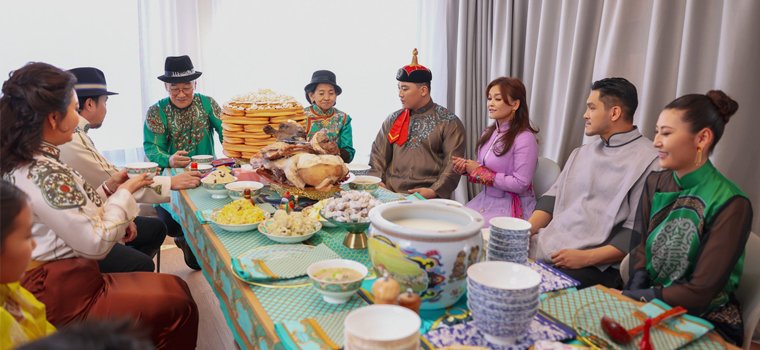 The Symbolism of "White"
Mongolia celebrates its own unique lunar transition called Tsagaan Sar (the "White Month")
1.The Symbolism of "White"
In Mongolian culture, the color white represents purity, honesty, and a clean slate. Unlike other Lunar New Year celebrations that focus on red, Tsagaan Sar is dominated by white:
- Dairy products (called Tsagaan Idee) are the centerpiece.
- White felt and clothing are preferred.
- It marks the "cleansing" of the past year’s grievances.
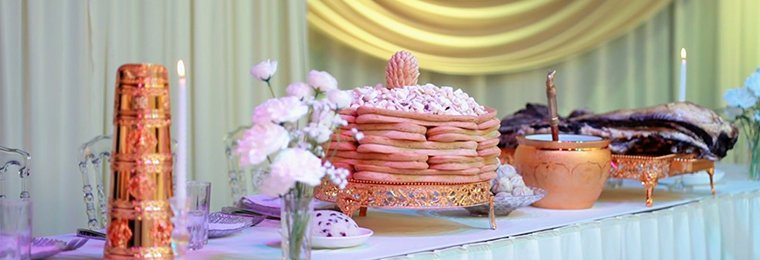
2.The Battle of the Pastries: Ul Boov vs. Gurmel
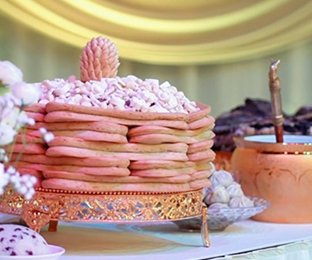
One of the most visual parts of the festival is the Tiered Tray (Tavgiin Idee). While the base is always the same, the style of pastry reveals fascinating regional identity:
The Iconic Ul Boov
Most common in Central and Khalkha Mongolia, these are thick, "sole-shaped" biscuits. They are stacked in odd-numbered layers (3, 5, or 7) to represent the cycle of life: Happiness-Suffering-Happiness. The stack always ends on "Happiness."
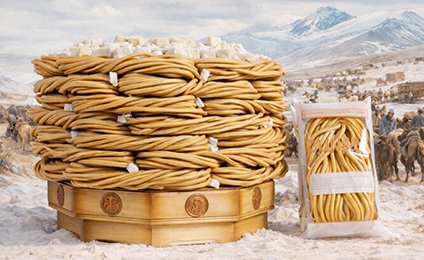
The Elegant Gurmel (Гүрмэл)
If you visit families from the Torguud or Zakhchin ethnic groups (Western Mongolia), you won't see Ul Boov. Instead, they decorate their tables with Gurmel.
- What it is: A hand-twisted, braided pastry that requires immense skill to weave.
- Meaning: The intricate braids represent the strength and unity of the family lineage—intertwined and unbreakable.
The Trend: Recently, Gurmel has become a high-fashion choice for city dwellers in Ulaanbaatar looking to add a touch of "Western Mongolian flair" to their celebrations.
3.The Rituals of Connection
Tsagaan Sar isn't just a party; it’s a social contract. Two key rituals stand out:
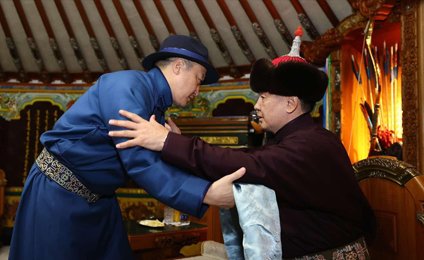
- Zolgolt (The Greeting): The younger person places their hands under the elder’s elbows to show support. It is a beautiful physical gesture of "I will carry you as you have carried me."
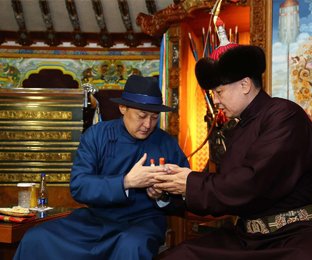
- The Snuff Bottle (Khoorog): Men exchange snuff bottles made of semi-precious stones. It is the "business card" of the steppe—a silent way to gauge someone's status and character.
Quick Facts: The Tsagaan Sar Checklist
Bituun (Eve)
The night of "fullness." You must eat until you are completely full to ensure prosperity.
The Buuz Count
An average family makes 1,000 to 3,000 steamed dumplings (Buuz) by hand.
The First Sun
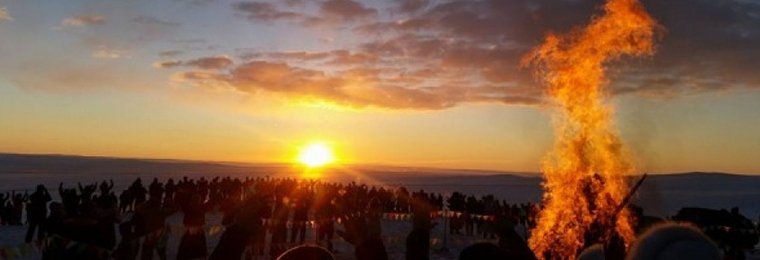
On the first morning, many climb the nearest sacred mountain to greet the sun.
No Black Clothing
Wearing black is considered a bad omen; bright, colorful Deels are a must.
4.Etiquette for Visitors (How to Not Get Kicked Out)
If you are lucky enough to be invited to a Ger during the White Month, follow these rules:
- Never step on the threshold. Step over it with your right foot.
- Clockwise is the way. Always move around the Ger in a clockwise direction.
- Use your right hand. Receive all gifts, tea, and food with your right hand (or both), never the left.
- Try everything. Even if it’s just a tiny sip of Airag (fermented mare's milk), refusal can be seen as rejecting the family's hospitality.

 English


 E-mail service@eventour.mn
 Phone +97677728999